|
Crystal Oscillators and Resonators
A crystal oscillator is an electronic circuit that uses the mechanical resonance of a vibrating crystal of piezoelectric material to create an electrical signal with a very precise frequency. This frequency is commonly used to keep track of time (as in quartz wristwatches), to provide a stable clock signal for digital integrated circuits, and to stabilize frequencies for radio transmitters and receivers. The most common type of piezoelectric resonator used is the quartz crystal, so oscillator circuits designed around them were called "crystal oscillators".
Quartz crystals are manufactured for frequencies from a few tens of kilohertz to tens of megahertz. More than two billion (2x10⁹) crystals are manufactured annually. Most are small devices for consumer devices such as wristwatches, clocks, radios, computers, and cellphones. Quartz crystals are also found inside test and measurement equipment, such as counters, signal generators, and oscilloscopes.
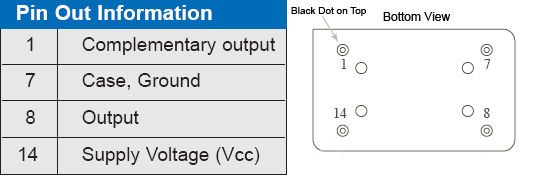
This is a general crystal resonator pinout diagram. These are used in old computer/electronic equipment
If you connect a voltage source (5 volts is a good test) to pin 14, ground to pin 7, and then a small wire (used as an antenna) to pin 8, you will be transmitting on that frequency. If you have a scanner, or ham radio that will tune in to that frequency, you can hear the signal. It will usually sound quiet. However, if you move up or down in frequency from the exact frequency of the resonator, you will hear a tone. If you connect and disconnect your power, you can actually test your morse code skills if you wish..
|
|